Grease Trap Cleaning & Maintenance for Restaurants and Cafes
Every commercial kitchen sends fat, oil, and grease down the drain. Over time, that FOG cools, congeals, and clings to the inside of pipes, and if it isn't intercepted before it leaves the building, it ends up in Adelaide's sewer network, where it hardens alongside grease from hundreds of other kitchens. SA Water spends significant time and money each year clearing these blockages, and when a fatberg forms in a section of main, the businesses connected upstream are often the first to feel the consequences through backups, overflows, and burst pipes.
For restaurants and cafes, this is more than a inconvenience. Trade waste agreements with local councils typically require a functioning grease trap or interceptor as a condition of operating, and inspectors can request maintenance records at short notice. A blocked trap or a lapsed cleaning schedule can result in fines, and a kitchen forced to close mid-service because of a sewage backup carries a reputational cost that's hard to shake off, especially in hospitality where word travels fast among regulars and reviewers alike.
At Best Plumbing Maintenance, we work with commercial kitchens across Adelaide and the Barossa Valley to keep grease traps compliant and functioning properly, so operators can focus on service rather than worrying about what's happening beneath the sink. As Adelaide plumbers who handle both scheduled maintenance and emergency callouts, we've seen firsthand how a simple cleaning routine prevents the kind of blockages that shut kitchens down.
What Is a Grease Trap or Interceptor and How Does It Work
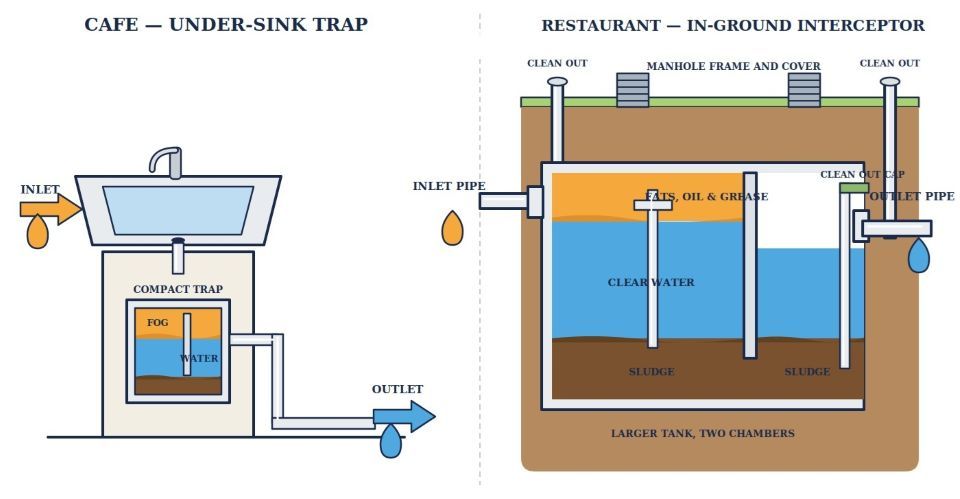
A grease trap works on a simple principle: fat, oil, and grease are lighter than water, so when wastewater slows down and sits for a moment, the FOG naturally rises to the top while food solids sink to the bottom. What's left in the middle is comparatively clean water, which flows out into the sewer system while the grease and solids stay behind, trapped until they're removed during a service.
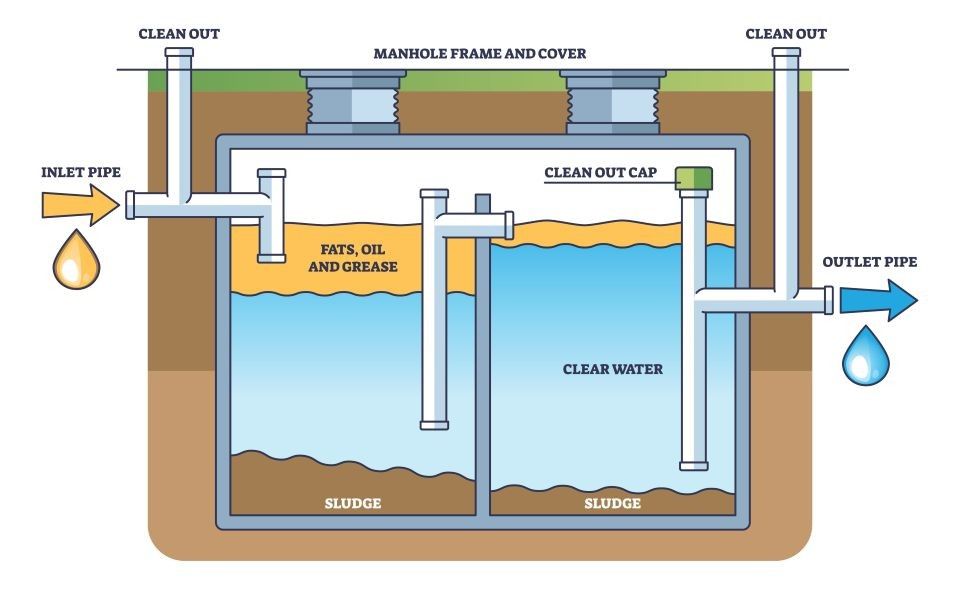
This settling process relies entirely on gravity, which is what makes these systems mechanically simple and reliable. There are no moving parts to fail, but the trade-off is that the grease layer only builds up over time. It needs to be physically scooped or pumped out on a regular schedule to keep the trap working the way it's meant to.
Where the trap sits in the plumbing system depends largely on the size of the kitchen and the volume of grease it produces. Smaller cafes and takeaway kitchens often use under-sink units, compact traps installed directly beneath the kitchen sink that intercept grease before it enters the main drainage line. Larger restaurants and commercial kitchens with heavier grease loads typically need in-ground interceptors, larger tanks installed outside the building or beneath the floor, positioned between the kitchen's wastewater outlets and the connection to the council sewer main. These bigger units handle greater volumes and are usually the ones subject to council trade waste agreements and scheduled inspection requirements.
Staying on the right side of SA Water
SA Water requires most commercial food preparation and service sites to have a pre-treatment device, and where wastewater carries significant grease and suspended solids, that means a grease arrestor sized to the business. Getting this right at the fitout stage matters just as much as maintaining it afterward. An approved grease trap needs to be installed by a licensed plumber and properly maintained, and new tenancies are often required to meet minimum capacity standards before SA Water will approve the connection agreement. This is where our Adelaide commercial plumbers come in, since installation and compliance sign-off need to happen together rather than as separate steps.
Once a kitchen is up and running, staying compliant is an ongoing responsibility. SA Water's grease trap management is now largely automated, and fines are issued when a grease trap becomes overdue for servicing. Trade waste licences can also be varied or reviewed as a business changes, so a kitchen that expands its menu or expandds may need to revisit what its existing trap can handle. None of this shows up as a problem on a quiet Tuesday. It shows up when SA Water flags an account, or when a routine audit finds a service history that doesn't match what the trade waste agreement requires.
Regulators care about this because of what happens downstream. Grease that isn't caught at the source flows into the same council mains that dozens of other kitchens share, where it cools and binds with everything else in the pipe. That buildup causes blockages, which lead to sewer overflows, property damage, and a real risk of polluting local waterways.
How Often Should Grease Traps be Cleaned?
Most Adelaide commercial kitchens need a pump-out somewhere between monthly and every three months, with a quarterly service being a common baseline. The right interval depends on how much grease the kitchen produces and how big the trap is: a busy kitchen doing heavy frying will fill a trap much faster than a small cafe, and a compact under-sink unit reaches capacity sooner than a large in-ground interceptor.
The actual frequency required for a given site is set out in its trade waste agreement with SA Water, so that's the document to check rather than relying on a general rule of thumb. If service records consistently show the trap well under capacity at each pump-out, it's often possible to apply to SA Water for a longer interval. Either way, pump-out records need to be kept and produced on request, since a good cleaning habit still needs to be backed by documentation if an inspection comes up.
The Warning Signs Staff Notice Before you Do
The signs that your grease trap needs attention usually show up on the floor, in the sink, or in a passing comment from kitchen staff, long before anyone thinks to check the trap itself.
A drain that used to clear in seconds and now takes its time is often the first clue. As the grease layer inside the trap builds up, it narrows the space wastewater has to pass through, so sinks and floor drains start running slower even though nothing else in the kitchen has changed. Left long enough, that slow drain turns into a gurgle, air pushing back up through standing water as it struggles to find a way past the blockage.
Smell tends to follow soon after. Grease that's sat too long starts to break down, and the odour has a way of finding the front of house even when the problem is confined to the kitchen. It's rarely subtle once it starts, and by the time customers notice it, staff usually already have.
Pests are drawn to the same thing. Flies and cockroaches don't need much encouragement around a food source, and a grease trap overdue for cleaning is exactly that. An uptick in pest activity near the kitchen drains, especially around the trap itself, is often a maintenance issue wearing a different hat.
The clearest sign, though, is grease itself showing up somewhere it shouldn't. Overflow around the trap, or water pooling on the kitchen floor toward the end of service when the drains have taken the most punishment all day, usually means the trap is at or past capacity and has nowhere left to send what it's holding back. At that point, it's not a maintenance reminder. It's a trap that needs pumping out before the next shift, not the next scheduled visit.
Grease Trap Maintenance for Cafes vs Full Restaurants
A cafe with light food prep sends far less fat down the drain than a kitchen with fryers or a grill, so a compact under-sink unit on a longer service interval is often enough to stay compliant. A full restaurant kitchen fills the same size trap much faster, which usually means a larger in-ground interceptor and a tighter pump-out schedule to avoid overflow between services.
Trap size isn't optional based on how a business sees itself. A small cafe still falls under SA Water's commercial food preparation requirements if it prepares and serves food, so assuming a modest setup is exempt is a common way to end up non-compliant without realising it.
Location also matters. Adelaide metro kitchens work to standard SA Water trade waste conditions, but councils across the Barossa Valley can apply their own requirements on top, particularly for wineries with cellar door kitchens and regional function venues. Access also plays a role: a pump-out truck reaching a CBD restaurant is a different job to servicing a site further out in the valley, and that affects how maintenance gets scheduled. Our team provides plumbing services in the Barossa Valley alongside Adelaide metro, so trap servicing is set up around what each site and council actually require, not a one-size interval applied everywhere.
Keeping Your Kitchen Compliant and Your Drains Clear
A grease trap that's properly sized, cleaned on schedule, and backed by good records does most of the heavy lifting here. It keeps fat out of the council mains, keeps SA Water off your back, and avoids the kind of mid-service blockage that shuts a kitchen down when it can least afford to be closed.
If you're not sure whether your current setup matches what your trade waste agreement actually requires, or it's been a while since your last service, that's worth sorting out before it becomes an inspection issue rather than a maintenance one. Our team handles grease trap installation, cleaning, and compliance for cafes and restaurants across Adelaide and the Barossa Valley, as part of our broader commercial plumbing services.
If you're expanding your kitchen or fitting out a new premises, it's worth getting the grease trap sized and installed correctly from the start, rather than retrofitting once SA Water flags an issue. We work with operators on fitouts across both regions to make sure the trap, plumbing, and trade waste setup are right from day one.
Get in touch with our Adelaide plumbers to book a grease trap service, plan a fitout, or get your setup checked against current requirements.
Other plumbing articles