Commercial hot water for Adelaide property managers: sizing guide
Commercial hot water systems for Adelaide property managers: how to size for apartment blocks and multi-unit buildings
A hot water system in a house is a simple decision. In a block of 20 units, the same decision involves capacity, running costs, access for maintenance, and the risk of a tenant going without hot water on a cold Monday morning. Property managers usually make this call with two or three quotes on the table and a tenant complaint already waiting. This guide covers the questions that matter most when you approve the work.
Start with peak demand
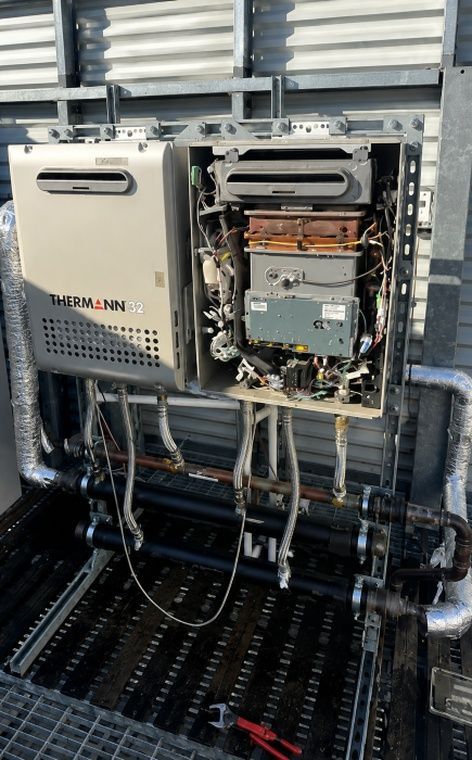
System size depends on how much hot water the building uses in its busiest period, which is usually the hour or two before work and school. Individual draws are small, but they overlap. A plumber calculates probable simultaneous demand using the design method in AS/NZS 3500.4, which accounts for the number and type of fixtures and how often they run together.
Consider a building with 24 two-bedroom units, each with a shower, a basin and a kitchen sink. Most of the hot water use happens between 6:30 and 8:30 in the morning. The storage and recovery rate need to cover that window. A system sized for the average daily use will run short on the first cold morning of winter, and tenants will notice.
Ask the plumber to show the demand calculation, not just the final tank size. A written calculation tells you what assumptions sit behind the quote, and it gives you something to compare against other quotes.
Central or individual systems
A central system uses one plant room, one or more storage tanks and a recirculation loop that keeps hot water near the outlets. This setup gives you one service point, one set of records and usually a lower cost per unit. Heat pump plant also works well at this scale, since the efficiency gains add up across many units.
The trade-off sits in the recirculation loop. Pipework loses heat over distance, and the pump uses electricity to keep water circulating. A poorly designed loop can cost more to run than the storage itself. When one central component fails, every unit is affected at once.
Individual systems put a small unit in each dwelling. Tenants can control their own supply, and a fault affects only one unit. Metering is straightforward, which suits buildings where each tenant pays their own energy bill. The cost is more units to service over time, more space needed for each system, and, in some buildings, the need for strata or owners corporation approval for external components.
Most managers will land on one approach or the other based on the building layout, the energy arrangements and the maintenance team available. The right answer depends on the specific building, so ask the plumber to cost both options alongside each other.
Heat pumps, gas and electric
Heat pump systems have the lowest running costs in most multi-residential applications. They suit Adelaide’s climate well, and they perform efficiently across the mild months that make up much of the year. Their limitations are physical. Commercial heat pump systems need a large cylinder, outdoor plant space and a noise assessment. Check the location of the outdoor unit against neighbouring properties before you commit.
Gas systems recover quickly and deliver high output, which makes them well suited to large peak loads. They need an adequate gas supply, a compliant flue and regular servicing. Their running costs follow gas tariffs, which change, so ask the plumber to estimate costs using current rates instead of a figure from a brochure.
Electric resistance systems are simple and reliable. They tend to cost more to run than heat pumps and gas, so they are most often used for smaller loads, as boosters, or as backup for a heat pump. Ask the plumber to show how any electric element will work alongside the main system.
Whichever type you choose, request a running cost estimate with the quote. It takes one more step in the process, and it helps you compare options fairly over the life of the system.
Temperature control and Legionella
Legionella bacteria grow in warm water that sits in pipes and storage for long periods. Storage temperature is the main control. AS/NZS 3500.4 and related guidance set storage temperatures at 60°C or higher in most multi-residential systems, with tempering valves blending the water down to a safe delivery temperature at the outlets.
Tempering valves need testing and records. A valve set incorrectly can scald a tenant or allow water to stay too cool for control. Ask your plumber to confirm the storage temperature, the tempering valve set point, the recirculation loop temperature and the date of the last test. A good plumber will provide these details in writing at commissioning and will include them in the maintenance records.
Maintenance that protects the investment
A commercial hot water system lasts longer and runs better with regular servicing. Adelaide’s water is hard, so scale builds up in storage tanks, heating elements and heat exchangers. An annual service should include an anode check on storage tanks, a test of the pressure relief valve and tempering valve, a descale where the water conditions call for it, and a clean of filters and heat pump coils. The plumber should also check thermostat settings and record the storage temperature.
Keep a service log for each system. The log shows the work done and the dates, and it becomes essential if a warranty claim or insurance question comes up. Many property managers find that a simple shared spreadsheet, with the service provider’s report attached to each entry, is enough.
Scheduled servicing costs far less than emergency call-outs. A missed anode replacement can lead to tank failure, and a tank failure in a block of units means a flood, a tenant relocation and a larger repair bill.
Questions to ask before you approve a quote
Before you sign off on any quote, ask the plumber to answer a few questions in writing. What demand calculation did you use, and what assumptions sit behind it? What storage temperature and tempering valve settings will the system run at? What is the warranty on the tank, the plant and the labour, and what does the warranty require from the owner in terms of servicing? What compliance certificates will you provide at completion?
If you want to talk through the options, commercial plumbing services in Adelaide covers the work we do for building owners and managers. For background on hot water systems at a residential scale, read our hot water system guide.
Other plumbing articles