Water Under the Sink? Here's Where It's Probably Coming From
You open the cupboard under the sink and find water sitting on the bottom shelf. Maybe it's just a few drops, or perhaps there's a small puddle that wasn't there yesterday. Either way, it's a sign that something isn't right.
A leak under the sink can come from several different places, including the drain, water supply hoses, tap, dishwasher connection or even condensation on cold pipes. Some problems are quick and inexpensive to fix, while others can cause damage to your cabinets, flooring and surrounding areas if they're left unchecked.
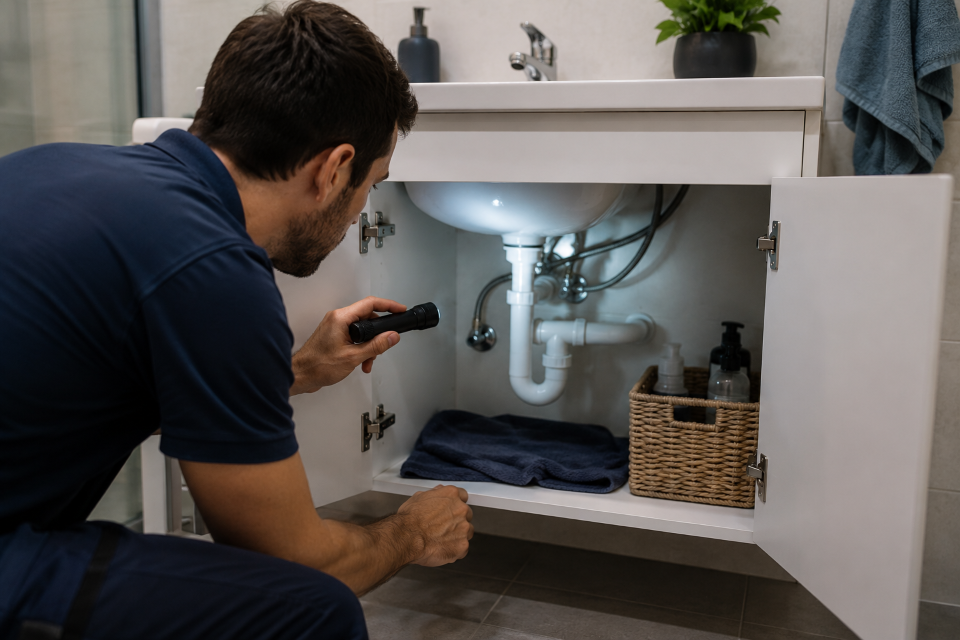
Before you start tightening fittings or reaching for the silicone, it's worth taking a few minutes to work out exactly where the water is coming from. The source isn't always as obvious as it first appears.
Where Could the Water be Coming From?
A leak that's only there after you've used the sink usually has a different cause from one that's present all the time. Start by drying the inside of the cabinet with a towel so you're working with a clean, dry surface. Once everything is dry, test each part of the plumbing separately instead of doing everything at once.
Turn on the tap and let it run for a minute while checking the flexible hoses, isolation valves and the base of the mixer tap. If nothing appears, put the plug in the sink, fill it with water, then let it drain. This places more water through the waste and trap, making leaks around drain fittings much easier to spot. If there's a dishwasher connected under the sink, run a short cycle while watching the inlet and drain hoses. It's not uncommon for a connection to leak only while the dishwasher is filling or emptying.
As you're checking, look for fresh drips. A puddle doesn't always form directly below the leak. Water can run along a pipe or the underside of the sink before finally dripping into one spot.
The Most Common Causes of a Leak Under the Sink
There are a handful of places where most under-sink leaks begin. Working through them one by one is usually the quickest way to find the problem.
Loose Drain Connections
The drain pipe beneath the sink is made up of several sections joined together with compression fittings. Over time, these fittings can loosen slightly due to normal use, vibration or previous plumbing work. A loose connection will often drip while the sink is draining rather than while the tap is running. Check around the P-trap, waste pipe joints and compression nuts for moisture or fresh drips as water passes through.
Worn Sink Drain Seal
The basket waste is sealed to the sink with a rubber gasket or plumber's putty. As these seals age, they can dry out, crack or lose their seal. If water appears around the top of the drain pipe directly beneath the sink, particularly when the sink is full or draining, the basket waste seal may need replacing.
Damaged Flexible Hoses
The hot and cold water supply is usually connected to the tap with flexible braided hoses. Although they're designed to last for years, they can eventually corrode, split or begin leaking around the fittings. Run your hand carefully around each hose and connection to check for moisture. Even a slow drip can cause surprising amounts of water to collect inside the cabinet over time. Burst flexi hose bursted?
A Leaking Mixer Tap
Not every tap leak is visible above the sink. Internal seals and cartridges can fail, allowing water to escape inside the tap body before running down underneath the sink. If the hoses are dry but water is appearing around the base of the mixer tap, the tap itself could be the source.
Dishwasher Connections
If your dishwasher shares the same cabinet, don't overlook its plumbing. Both the water supply hose and the drain hose can develop leaks, while hose clamps may loosen over time. These leaks often only occur while the dishwasher is filling or pumping water out, so it's worth checking during a wash cycle rather than when the appliance is sitting idle.
Water Filter Systems
Water filters installed beneath the sink use push-fit connectors and filter housings that can occasionally develop slow leaks. Because the drips are often small, they can go unnoticed for weeks until water starts collecting inside the cupboard.
Cracked Pipes or Traps
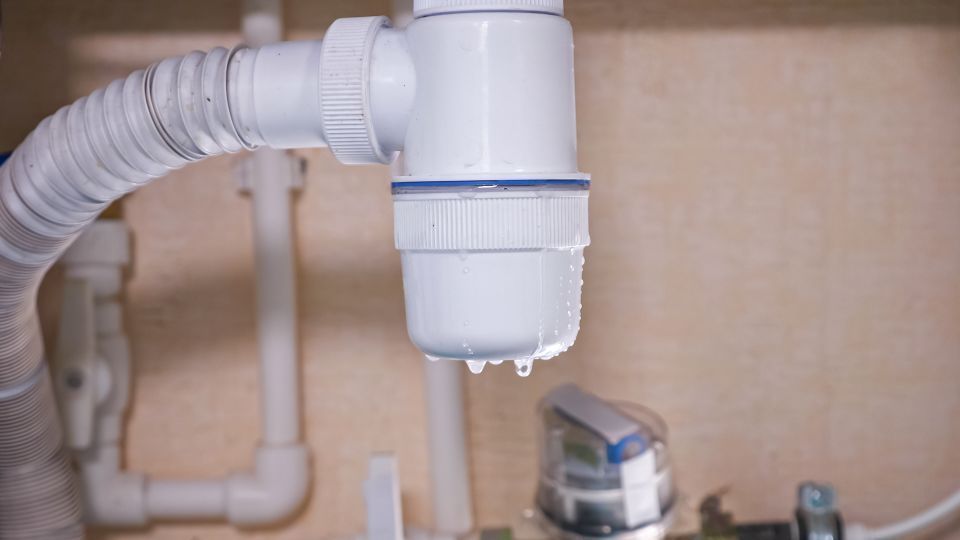
Plastic waste pipes and P-traps are durable, but they're not indestructible. Age, accidental knocks from stored items or previous overtightening can cause small cracks to develop. These cracks may only leak while water is flowing through the drain, making them easy to miss unless you're watching the pipe as the sink empties.
Condensation That Looks Like a Leak
Not every wet cabinet is caused by faulty plumbing. During humid weather, cold water pipes can develop condensation, with droplets forming on the outside of the pipe before dripping into the cupboard below. If the moisture appears evenly across the pipe rather than around a fitting or joint, condensation is a more likely explanation than a plumbing leak.
Can You Fix It Yourself?
That depends on what's causing the leak. Some under-sink problems are uncomplicated and can be dealt with using basic tools, while others are best left alone until a plumber can inspect them.
If you've found a loose connection on the waste pipe or P-trap, try tightening it by hand first. Many compression fittings aren't designed to be overtightened, and using a wrench can sometimes make the problem worse. If a rubber washer has worn out and you can easily access it, replacing it is often a simple repair. It's also worth cleaning around the fittings, drying the cabinet completely and checking back after using the sink. Sometimes this is all that's needed to confirm whether you've solved the problem or if water is still finding its way into the cupboard.
Leaks involving the water supply are a different story. Flexible braided hoses, isolation valves and pressurised pipework should generally be repaired or replaced by a licensed plumber, particularly if the leak is more than an occasional drip. The same applies if a hose has burst, a valve is leaking, water appears to be coming from inside the wall, or you can't clearly identify where it's coming from.
If you've tightened a fitting but the leak keeps returning, don't keep tightening it in the hope it will stop. Persistent leaks usually indicate a damaged seal, cracked fitting or another fault that needs proper repair or replacement.
Don't Ignore Water Inside the Cabinet
It's easy to wipe up the water, close the cupboard door and deal with it another day. The problem is that the leak doesn't stop just because the water is out of sight.
Cabinets are usually the first thing to suffer. Timber, particleboard and MDF absorb moisture, causing the base of the cupboard to swell, soften and eventually break down. What starts as a simple plumbing repair can quickly turn into replacing cabinetry as well.
If the water escapes the cabinet, it can damage flooring, skirting boards and nearby walls. In some cases, moisture can seep into the subfloor or wall framing, where the damage remains hidden until it becomes a much larger and more expensive repair.
A constantly damp cupboard also creates the perfect conditions for mould growth. Besides the musty smell, mould can spread to surrounding materials and become much harder to remove if the leak isn't fixed promptly. Persistent moisture may even attract pests such as cockroaches, silverfish and termites, particularly if timber has remained damp for an extended period.
The sooner the source of the leak is repaired, the less chance there is of turning a relatively minor plumbing issue into a costly restoration project.
Know When It's Time to Put the Tools Down
There's nothing wrong with tightening a loose trap or replacing a worn washer if you're confident doing so. But once the leak involves the water supply, hidden pipework or fittings you can't easily access, it's safer to stop and call a licensed plumber. Trying to force a fitting tighter, using the wrong replacement parts or attempting a temporary repair can often make the leak worse. In some cases, what starts as a slow drip can quickly become a burst hose or a significant water leak.
It's also worth remembering that not every leak is where it appears to be. Water can travel along pipes, behind cabinetry and even inside walls before becoming visible under the sink. If you can't identify the source, guessing rarely saves time or money.
If you've found water under your sink and can't work out where it's coming from, our licensed plumbers can help. We service homes across Greater Adelaide, locating the source of the leak and carrying out repairs that last. Contact our Adelaide plumbers on (08) 8261 0165 to arrange an inspection before the damage spreads.
Other plumbing articles