Is Sediment Ruining Your Hot Water System?
Strange rumbling or popping noises from your hot water system? Running out of hot water sooner than you used to? These can be signs that sediment has built up inside your storage hot water tank.
As sediment accumulates over time, it can reduce heating efficiency, increase wear on internal components and shorten the lifespan of your hot water system if left unchecked.
Why Does Sediment Build Up in Hot Water Systems?
Most mains water contains naturally occurring dissolved minerals, including calcium and magnesium. As water is heated inside a storage hot water system, these minerals become less soluble and gradually settle to the bottom of the tank, forming a layer of sediment.
The process happens slowly over many years and is a normal part of operating a storage hot water system. However, homes in Adelaide may experience sediment build-up more quickly because of our city's relatively hard water, which contains higher concentrations of these minerals than many other parts of Australia.
Storage hot water systems are far more susceptible than continuous flow systems because the same body of water remains inside the tank, allowing minerals to settle over time. Every heating cycle leaves behind a little more sediment, which gradually accumulates if it isn't removed during servicing or maintenance.
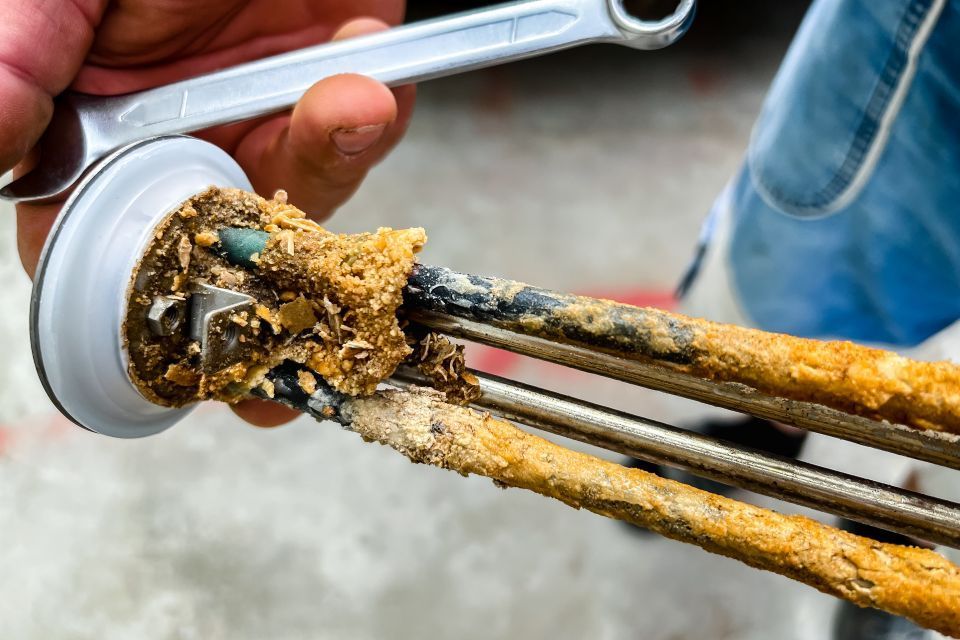
Not all sediment is made up of calcium and magnesium alone. Depending on your water supply and plumbing system, it can also contain fine particles such as sand, silt and other naturally occurring material carried in the water. Together, these deposits gradually collect at the bottom of the tank and begin to affect the way the system operates.
How Sediment Affects Your Hot Water System
As sediment builds up inside the tank, it forms a layer between the stored water and the heating source. This makes it harder for heat to transfer efficiently, so the hot water system has to work longer to heat the same amount of water. Over time, this can increase energy consumption and place additional strain on the system.
One of the first signs homeowners notice is unusual noises. Popping, rumbling or crackling sounds occur when water becomes trapped beneath the sediment layer. As the water heats, steam bubbles force their way through the sediment before escaping, creating the noises often heard from ageing storage hot water systems.
As the sediment layer becomes thicker, it can reduce the amount of usable hot water available in the tank. Because part of the tank's capacity is occupied by sediment rather than water, some homeowners find they run out of hot water sooner than they used to, particularly during periods of high demand.
The additional workload can also accelerate wear on internal components. Heating elements, thermostats, temperature sensors and valves may all have to operate under more demanding conditions, increasing the likelihood of repairs over the life of the system. Prolonged sediment build-up can shorten the overall lifespan of the hot water system and make replacement a more economical option than continued repairs.
Can Sediment Be Removed?
Storage hot water systems can be flushed to remove loose sediment before it causes significant problems. When carried out as part of routine servicing, flushing can improve performance by removing sediment that has settled at the bottom of the tank.
However, if sediment has hardened over many years, become compacted, or caused damage to internal components, simply draining the tank may remove only part of the build-up. Older systems that have never been serviced are often more difficult to restore, particularly if sediment has already affected the heating element, thermostat or valves.
The age and condition of the hot water system also matter. If the unit is nearing the end of its expected service life, replacing worn components may provide only a short-term improvement. Replacing the hot water system can be a more cost-effective option than investing in multiple repairs.
A licensed plumber can inspect your hot water system and recommend the most appropriate option based on its age, condition and the extent of the sediment build-up. Best Plumbing Maintenance provides hot water servicing, repairs and replacements throughout Greater Adelaide. If your hot water system is making unusual noises, taking longer to heat or showing signs of reduced performance, contact our experienced team to arrange an inspection.
Call us on
(08) 8261 0165
or
request a free quote online.
Other plumbing articles